


Blog
IT Sectors That Withstand the Storm: Top 5 Directions of 2025

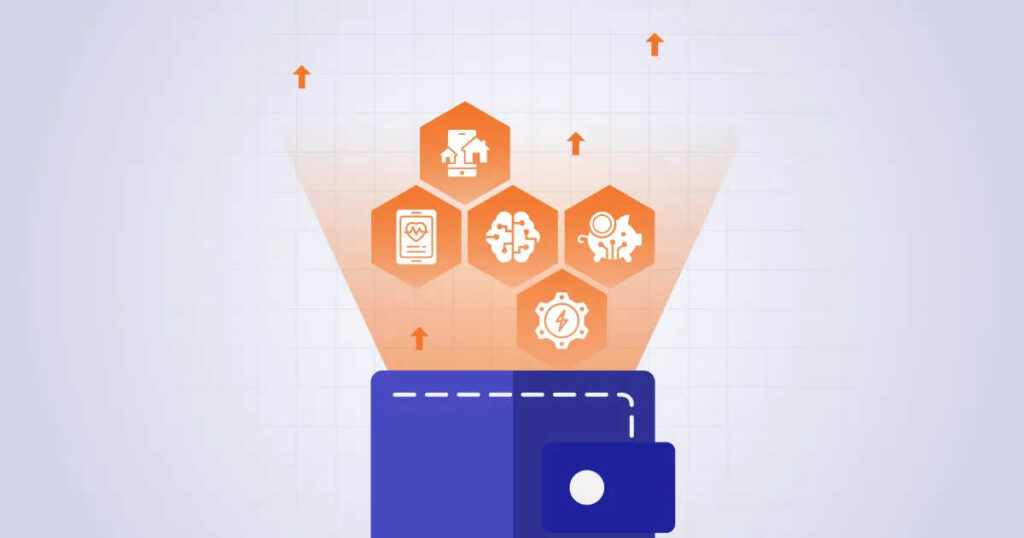
Despite the war and global economic challenges of 2025, certain IT sectors continue to grow and actively seek specialists. These priority fields are leaders of current trends, so recruiters should pay attention to them and maintain contact with professionals working in these IT directions.
DefenseTech: From Cybersecurity to Military Analytics
The Ukrainian defense technology sector is showing remarkable dynamics. Over the past few years, it has grown by an average of 25% annually, and by early 2025, more than 1,200 innovative companies operate here. In addition, the EU and partners are actively investing in cybersecurity development (with €90.5 million allocated to research), and Ukraine has launched support programs such as Reskill UA and others.
Even ordinary businesses are now forced to strengthen security—since the start of the full-scale war against Ukraine, over 6,600 large-scale cyberattacks from Russia have been recorded. The response has been the rapid implementation of military analytics and AI solutions: companies collect gigabytes of combat data and use AI to decode satellite imagery, analyze disinformation, and even autonomously pilot strike drones.
With the growth of Ukraine’s defense market, demand for embedded developers in military projects has sharply increased. The weekly TheDefender publishes dozens of open positions for Embedded Engineers in drone manufacturing startups, EW/ESM systems, and more.
Ukrainian analysts note that the “embedded software” segment is the most stable in growth: in Q1 2024, embedded engineer salaries (C, Linux) rose by 10–20%. Funding for DevOps, Data, and AI teams in DefenseTech has also increased significantly: startups calculated salary increases of 25–40% for Cloud/ML engineers and DevOps specialists.
Demand is also growing for certified cybersecurity experts: in Q1 2024, requests for security audits increased, and compensation for experienced “white-hat” specialists reached $8–10k per month. Many DefenseTech projects operate under NDA and are not publicly advertised, but they are usually long-term and financially stable.
HealthTech and Medical Data
The digitalization of healthcare is another sector growing actively despite crises. The global HealthTech market is already valued at $313 billion (2024) and may reach $388 billion in 2025, and by 2034 – $2.19 trillion.
In Ukraine, where healthcare has endured both the pandemic and the war, numerous startups and initiatives in digital medicine have emerged. Demand for telemedicine services, platforms for doctors and patients, and analytical systems is increasing. According to industry reviews, after the pandemic began, interest in telemedicine and electronic medical records (EMRs) grew significantly in Ukraine, and access to mobile medical applications became critically important.
Ukrainian clinics are already implementing AI diagnostic solutions: artificial intelligence detects lung nodules with 94% accuracy (compared to 65% for a doctor), and AI-based disease prediction projects gain international recognition (for example, the startup CheckEye won the European InnoStars award for mass eye disease screening).
Worldwide, demand for HealthTech specialists is rising: telemedicine platforms, data analytics, and AI diagnostics drive the search for Python developers, ML engineers, and data analysts.
Research shows that in Ukraine, 74% of doctors are confident that AI will reduce diagnostic errors. Companies also need DevOps architects to build secure cloud solutions and protected channels for sensitive data in accordance with international security standards. Ukrainian education and science in medical data are actively developing (AI centers are being established under government initiatives), so local candidates with ML and analytics experience are valued both domestically and internationally.
Automotive and Mobility Technologies
Automakers and mobility are another sector heavily investing in intelligent solutions. The global ADAS (Advanced Driver Assistance Systems) software market in 2024 was estimated at around $10 billion, with an expected CAGR of 21.2% until 2034. Automotive corporations and startups continuously add AI features—from autonomous parking assistants to “predictive” thermal management in electric motors.
ADAS systems process data from cameras and radars within milliseconds to anticipate hazards and trigger braking or other responses. Departments for embedded development are expanding at BMW, Tesla, Continental, and other giants: C++ specialists and low-level ML (edge ML) engineers are more in demand than ever.
In the Automotive/MobilityTech field, there is typically a shortage of Embedded/C++ engineers. Even in a challenging market, companies continue to seek specialists for hardware optimization, integration with equipment, and predictive maintenance analytics.
There is also demand for data engineers and analysts experienced in big data: telematics systems collect enormous volumes of vehicle movement and condition data. In Ukraine, part of this work is carried out in R&D centers of European OEMs and Tier1 suppliers (for example, offices of Bosch, Valeo, and Continualitics are located in the western regions).
Even if some production capacities have moved abroad, Ukrainian engineers often work remotely. Top management of automotive companies values these specialists for their experience with “heavy” embedded software and their willingness to work on long-term innovations rather than short-term “hot” projects.
IoT, Industrial, and Embedded Systems
The IoT and embedded systems sector remains stable. The global IoT solutions market in 2025 may exceed $0.875 trillion with a CAGR of ~17%, and the number of “smart devices” worldwide will grow from ~18 billion to 32 billion between 2024–2030.
For industry, IoT means the “Smart Factory”: sensors and controllers on machinery allow real-time monitoring of equipment and timely maintenance. According to Deloitte, implementing IIoT helps reduce equipment downtime by up to 30% and increase production efficiency by 25%. This has a huge impact, so demand for Embedded developers (microcontrollers, C/C++), system architects, and firmware engineers remains high.
IoT security is also an important trend. Billions of new sensors and devices are added to networks annually, creating many vulnerabilities. Experts emphasize that any IoT project must prioritize cyber hygiene for devices and networks: weak firmware or unsecured communication channels can be an entry point for attacks on the entire system. Therefore, IoT teams value engineers experienced in building secure architectures and specialists in encryption protocols and device updates.
Additionally, demand is growing for system integrators: for example, smart factory solutions require engineers to configure data transmission channels, external cloud services, and hosting for aggregated IoT data. Companies like GlobalLogic, EPAM, and N-iX provide clients with IoT platform solutions, and their engineers gain experience with “raw” sensor networks and complex embedded OS.
Energy Technologies, Climate, and “Smart” Infrastructure
The energy technology sector and climate innovation infrastructure also rank highly. Following the destruction caused by the war, Ukraine is receiving significant investment for network restoration and energy system “intelligence.” The 2024–2025 legislation stimulates the development of energy storage systems and allows consumers to install their own generating units and sell excess electricity.
The share of renewable energy is actively growing: in the first half of 2024, “green” generation already accounted for almost 10% of Ukraine’s energy balance. Large companies invest in wind and solar parks (for example, DTEK invests hundreds of millions of euros in completing the Tiligul wind farm).
Smart grids are being implemented in parallel: automated power management systems reduce network losses and optimize load distribution. Ukraine is actively deploying digital meters and demand forecasting solutions, creating demand for network data analysts and energy managers with Big Data experience.
Globally, interest in Climate Tech is also rising: the climate innovation market in 2024–2025 is estimated in the tens of billions of dollars, with a CAGR of ~25% (forecasted from ~$25.3 billion in 2024 to $149.3 billion in 2032). This includes renewable energy (AI optimization of solar/wind farms) and IoT solutions for smart cities (air quality monitoring, street lighting, traffic regulation).
The market is already seeing growing demand for energy systems developers and integrators: specialists who can combine hydro/solar stations with cloud platforms, build data pipelines for weather and demand forecasting, and analysts who optimize generating capacities based on modeling.
Despite the current low number of vacancies, specialists in these five fields remain strategically important for Ukrainian and global IT.
Recruiters should maintain contact with candidates in DefenseTech, HealthTech, Automotive, IoT/Embedded, and EnergyTech: even passive professionals may accept offers for significant, long-term projects. They are valued for deep knowledge and experience with “heavy” systems, artificial intelligence, or critical infrastructure.
These are the professionals who seek stable work on solutions that bring real value. No matter the crisis, investing in connections with these experts will pay off when demand for technologies rises again.